
2025 Farm Tour a Success
PROTECTED CONTENT
If you’re a current subscriber, log in below. If you would like to subscribe, please click the subscribe tab above.
Username and Password Help
Please enter your email and we will send you a password reset link.
The Appling County Chamber of Commerce hosted the 2025 Farm Tour on Friday, May 30, in collaboration with the Appling Extension office.
The first stop after boarding the buses was Perry White’s pecan orchard, where Jose Flores provided a demo of the 1,000-gallon Durand-Wayland airblast sprayer. “It’s about as much fun as you can have at 1.8 miles an hour going through a field,” said White. The fungicide program is a preventative measure rather than a curative one. Fungicide resistance is a significant concern in the industry and growers must meticulously follow label instructions, considering application periods and pre-harvest intervals.
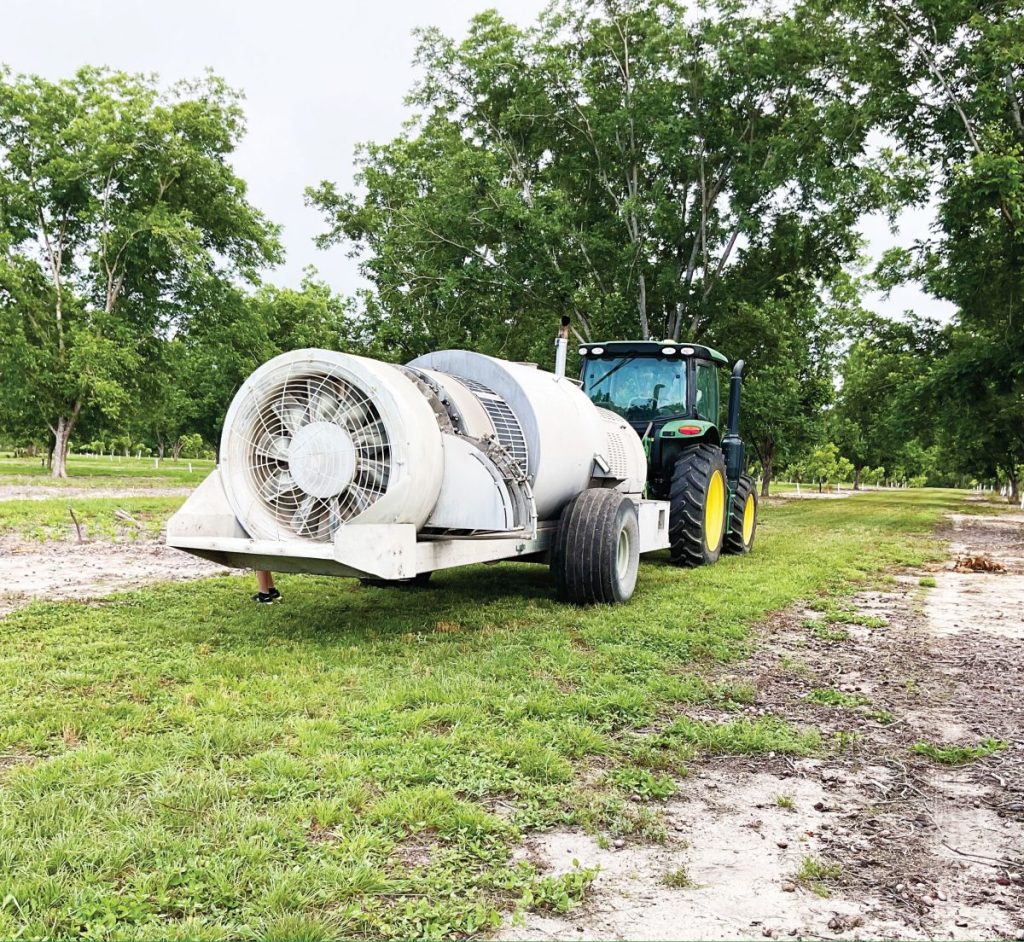
Hurricane Helene damaged around 700 trees on the seven-acre field, littering the ground with waterlogged crop that could not be scavenged effectively due to the amount of debris. The property was without power for sixteen days, preventing the microjet sprinklers from irrigating the trees. Microjet sprinklers are highly efficient at delivering water directly to the root systems of the trees and minimizing waste on grass. However, the surviving trees both in the orchard and across the state produced a better harvest than predicted by experts.
UGA pecan agent Andrew Sawyer said he was impressed by White’s ability to explain his practice and went on to explain how the trees pollinate. Although the trees produce more than enough pollen for the entire orchard, the surrounding trees prevent the spread, necessitating interplanting. One scientist at New Mexico State is studying genetic markers to determine how certain variants–like UGA’s Avalon–are able to resist diseases like scab, which leads to smaller, bitter-tasting nuts.
Sawyer commended the EPA for its strict regulations that prevent the use of persistent chemicals in contrast with countries south of the border, where older, potentially harmful chemicals are still in use, saying,“If we spray stuff and it’s still here a year later, then that’s a problem.”
Next, the group traveled to Perry White’s blueberry farm to discuss and observe how blueberries are sprayed, hedged, and harvested. Georgia is third in blueberry production in the nation and is capable of producing about 150 million pounds of blueberries annually. Appling County is ranked third in the state for blueberry production behind Alma at number one. Different varieties have a higher bloom content, which naturally helps keep the berry firm, viable, and more palatable to eat. The 90-acre farm has around nine different blueberry varieties, including University of Florida varieties Farthing and Sentinel.
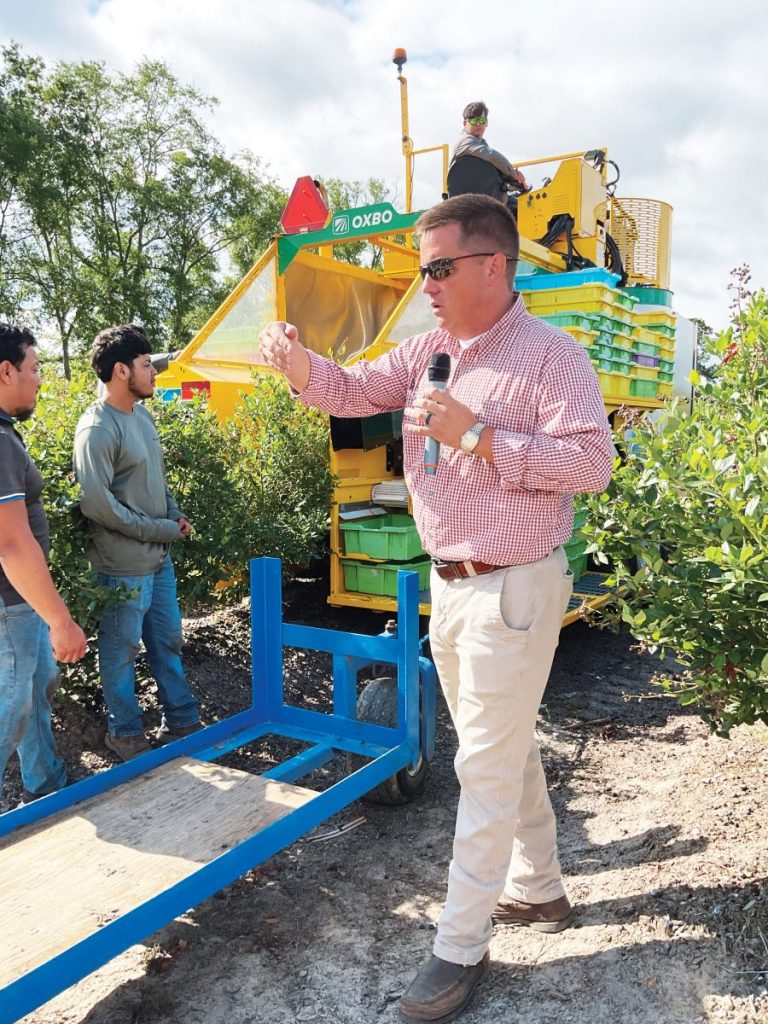
UGA Food Science and Technology professor Dr. Laurel Dunn spoke on the topic of food safety. Dunn suggested that washing blueberries at home may not be as necessary as many believe, as much emphasis is placed on keeping the crop ready-to-eat at any point in the packaging stage. “If there happens to be bacteria on those blueberries that you shouldn’t eat, washing isn’t actually going to be able to remove it. Some bacteria are really good at sticking to our fresh produce, and unless we cook that produce, we’re not going to remove it.”
At the final stop, Joe Eason hosted the tour of the Circle F sale barn, describing the 8,000 head of cattle on the farm. What began with just himself and one other person putting up fences, clearing land, and managing a small herd of cattle has since transformed into a multifaceted operation.
Circle F engages in diverse breeding programs to produce various types of cattle for different markets. Black Angus is a fashionable breed. They also breed Brahman cows with Angus bulls to produce F1 Brangus. Breeding Brahman cows with Charolais bulls results in Char-Brays, popular in Florida, Mississippi, Louisiana, and South Texas.
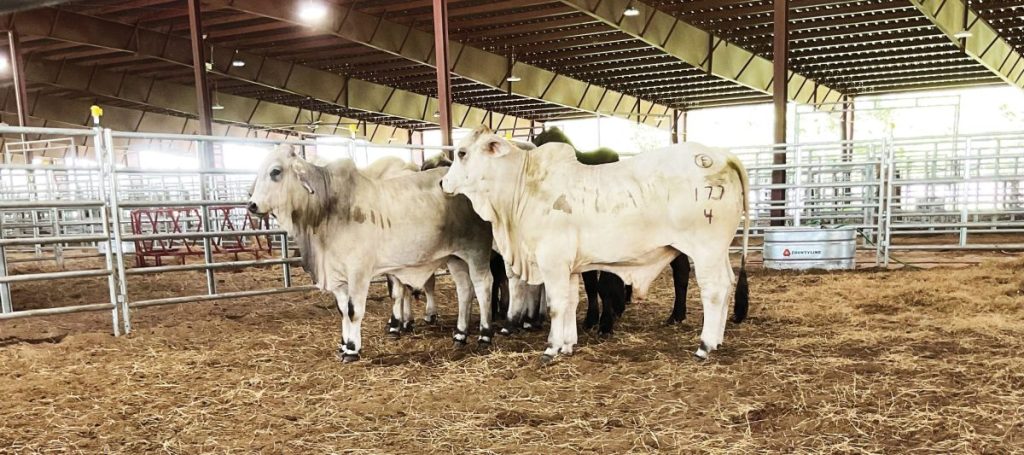
“Bulls in places like Florida with 30 or 40,000 acres need to be able to cover some country. He’s got to be an athlete,” said Eason. “You can be heavy and still be in shape, but if you sit on the couch and you’re heavy and you ain’t doing nothing, you ain’t an athlete. Same way with bulls, man.”
Heifers intended for breeding are given a modified live virus vaccine at least three times before being paired with a bull. Circle F also utilizes embryo transfer (ET)–flushing eggs from high-quality registered cows and implanting them into commercial recipient cows. This allows them to produce a larger number of registered calves from their elite genetics, though it is a labor-intensive process requiring careful management of the recipient cows to prevent stress-induced embryo loss.
Internal parasites are the most detrimental health issue for ranchers, hindering the growth and well-being of calves and cows. The vaccination protocol is rigorous, including pre-weaning and post-weaning for calves.
Grass is the main feed source in the cattle business, but Circle F has embraced modern feeding strategies, incorporating silage (sorghum and corn) into their feeding program for the past two years, often mixed with other supplements like DDGs and minerals.
States like Florida have stringent regulations that demand an electronic ID on each head of cattle. Eason provided a demonstration of a hydraulic chute used for tagging, vaccination, and insemination. The chute can be adjusted according to the size of the cow to prevent injuries from excessive movement and can process 200 head in just a few hours. With less pencil work, the process more closely resembles the check-out line at a grocery store than the manual labor of the past.
Each horse has a different discipline, like cutting, barrel racing.
The section concluded with Eason mounting his horse and providing a demo of horse cutting and gate work. Eason became teary-eyed when discussing his love for horses. “They kept me out of trouble and gave me something to do. When times have been rough, I get on my horse and I go get right with the Lord. That’s where I spend my time.”
The event ended at the Ag Center with a lunch of hamburger steaks, mashed potatoes, green beans and dessert catered by Circle F Meats.