
Waste not, want not
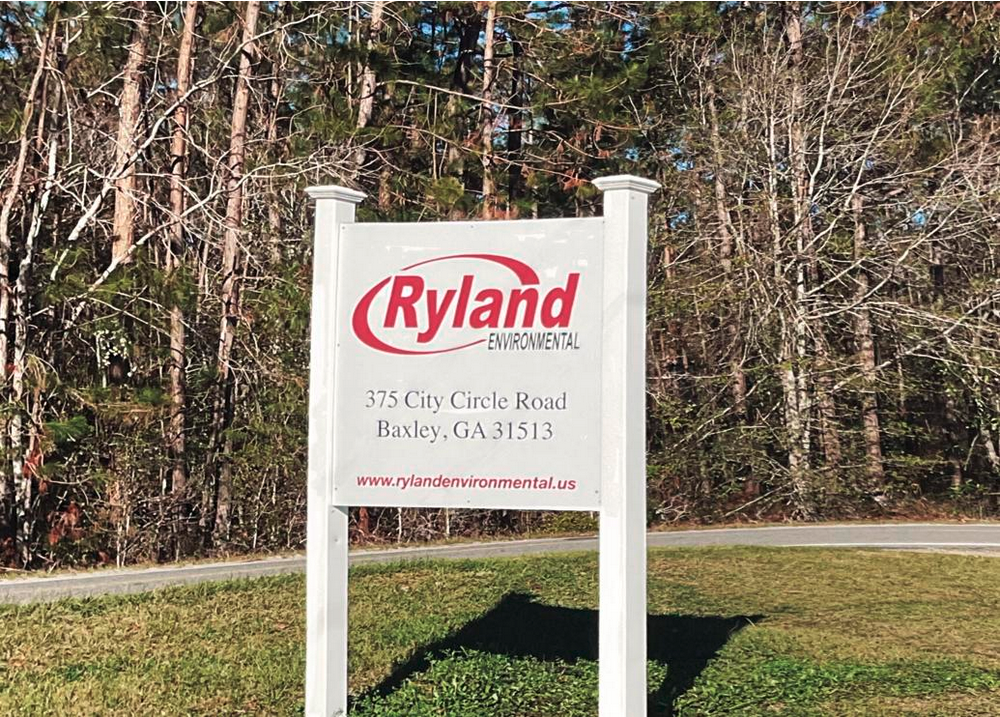
Every community, regardless of its size, deserves the best in waste and environmental solutions.
Ryland Environmental is a privately owned company owned by Todd Yates, which began business around 2008 in Dublin, GA and later expanded to eight Georgia locations. The Baxley location opened in 2014. The largest location is in Macon, where Ryland picks up the entire city.
Primary services include waste removal, recycling, commercial dumpsters, and industrial roll-off boxes. Roll-off boxes in most locations come in sizes of 20, 30, or 40 yards, offering businesses a solution for disposing of bulky items or large quantities of waste.
The continued success and longevity of the business is due to diversification.
Demand grew through municipalities via word-of-mouth, and Ryland’s services will soon expand to the city of Douglas. Ryland’s biggest competitor is Republic, although their services are located on the far side of Waycross.
“It’s one of those things, just like being a doctor or a lawyer. Once it gets in your blood, that’s what you want to do,” says Tony Sicari. His grandfather was in the business when he moved to New York from Italy. “We never locked our doors. We used to have block parties and everybody got along. I’ve been back to where I grew up, but it just isn’t the same Brooklyn.” Sicari was in the military for 4 years, but has worked in the family business most of his life. He retired two years ago, only for about a week.
Other than police and fire, solid waste was once one of the most dangerous jobs. Back in the day, the garbage man stood behind a truck in traffic in all kinds of weather. Automation has since made the job much safer. Front-load containers are picked up and dumped using forks, which used to require three-man crews but now only requires a driver. “It’s safer, it’s more efficient, and it’s cost-effective.”
Ryland has a fleet of 150 trucks company-wide, and drivers have either a Class A or Class B CDL. “There’s not very many young guys in their 20s and 30s,” says Sicari.
Those one-armed trucks can cost $390,000 a piece, with front-load trucks going for about $375,000. The ones that pick up the containers at the shopping centers go for about $280,000. Because of the constant wear and tear, trucks are traded in every 5-7 years.
One truck can hold 9 to 11 tons of trash. They can hold more on rainy days, and commercial trash is usually heavier due to wet waste. Commercially, about 35 to 40 tons are produced each week in Appling County. Residentally, an estimated 100 tons are produced each week in county-wide.
The region’s rurality poses a unique challenge when it comes to collecting on dirt roads. Weather is also a factor, as mornings can be foggy and storms can make roads impenetrable.
“You’ve got to have your head on a swivel,” says Sicari. “For some reason, garbage trucks attract kids.”
Following Hurricane Helene, trash cans disappeared overnight. To combat this, Ryland placed Roloff boxes throughout the county so those who could reach them could dispose of household trash—including spoiled food.
“I don’t mind going and talking to customers who have an issue or a problem,” says Sicari. “That’s my job. I want to make sure you’re happy with the service you get because your service is just as important as your electric service, water, and sewer.”
Ryland also offers recycling services on-demand. “About 10 years ago, cardboard was like the biggest thing in the world. Then it was computer paper. Then, it was aluminum.” The biggest demand for recycling is in Macon or Dublin, though it’s less of a trend than it was in the past.
Sicari expects landfill usage to decrease nationwide over the next 5 to 10 years as trash finds its way to resource recovery centers. 15 to 20 trucks can be dumped at a time onto the concrete floor. It gets pushed into the pit, picked up by a crane, and put in the furnace, which turns the garbage into steam and steam into electricity. On top of the furnace, there are guards to protect the atmosphere against pollution.
“The three landfills we use here, they’ve got life left in them. Even once you close that landfill and lock the gates, you’re responsible for twenty years,” says Sicari.
“Back in the day, what they used to do was dig a hole, throw the garbage in, throw some lime in, throw some dirt, and go. There was no piping for methane or leachating. It was a very unsanitary thing.” Garbage creates methane, and methane explodes. “Some of those landfills came back to haunt a lot of people,” says Sicari.
There are creative ways to repurpose landfills, such as Mount Trashmore in Virginia Beach, where a park was created over the lot to allow for picnicking in the summer and sledding in the winter.
“We’re going to make garbage for a long time. Once we’re all gone, they’ll still be making trash.”