
Distracted driving is a deadly habit
By Mary Ann Ellis
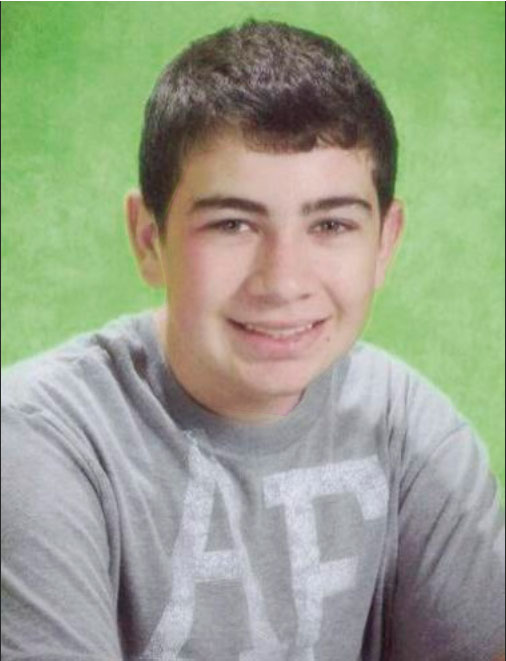
This article is written to honor the memory of Jacob Colby Hutcheson, a young victim of distracted driving.
April is the month designated as Distracted Driving Awareness month and as a time for people to think about the importance of safe driving. One bad accident can and does change the driver’s life as well as other people’s forever. The National Highway Traffic Safety Administration (NHTSA) says distracted driving claimed 3,142 lives in 2019–up ten percent from 2018.
Such was the case of Jacob Hutcheson, nearly 14. He would have been 14 on December 18 had he not been in that dreadful collision on December 7, 2008, with a driver whose eyes were on his GPS instead of the road. The driver simply wasn’t paying attention, and three other lives were lost that night in addition to Jacob’s. Consider the number of people who have suffered since then, and the number of accidents increases with the advancements in technology.
His mom, Heather Clegg, says Jacob was the best baby she’s ever known. He was content to lie on his blanket and play with his toys. He had beautiful long eyelashes that people raved about. As he grew, people continued to point out to him how beautiful those lashes were. One day when Jacob was about five, Heather glanced at him in shock and asked, “Jacob, what did you do to your eyelashes?”
“Mom,” he replied, “I’m a boy. I’m sick of people telling me my eyelashes are pretty, so I cut them off. I’m not supposed to be pretty.”
NHTSA says that distracted driving is any activity that diverts attention from driving, including talking or texting on the phone, eating and drinking, talking to people in your vehicle, fiddling with the stereo, entertainment, or navigation system—anything that takes your attention away from the task of safe driving.
Luther Pittman, owner of Angelo Driving Academy, says that he teachers his students to avoid the four types of distracted driving: Visual – not looking at the road; Auditory – hearing something other than driving; Manual – using something other than the wheel while driving; and Cognitive – thinking about something other than driving. These four things cause the common car accident and possible injuries or death.
“To prevent doing these four things, make sure to mentally prepare yourself before getting on the road and always be cautious of what you and others are doing while driving,” Pittman teaches his students.
Jacob Hutcheson loved school, especially math and reading but hated the AR program. Being smart and industrious had earned him a place in the Beta Club. He raised pigs with the 4-H program, but since he lived in town, he had to keep them at someone else’s house in the country. Daily, he traveled to care for them, to walk them, to spend time with them, and very much enjoyed the experience. He savored his school experiences, from raising pigs to schoolwork.
One day, he came home from middle school and said to his mom, “I’m tired of having the same IRL score every year. It’s always 12.9, no matter what I read.”
Heather replied, “Well, try missing an answer or two. That might help.”
A few days later, his teacher called Heather and said, “I just can’t understand what happened to Jacob. He went from his usual 12.9 on the AR test to a 4.4. He said you told him to miss a few.”
When the teacher heard the whole story, she made him retake the test, and as a teacher herself, Heather was embarrassed.
Magna, a mobility technology company, has started a program that detects and predicts when drivers are distracted. It uses camera-based technology to monitor the driver’s head, eye, and body movements to detect distracted behavior, drowsiness, and fatigue. Furthermore, the technology accounts for normal driving actions, such as looking in the side-view mirrors. If distracted behavior is detected, the driver is alerted through customizable audible or visual notifications.
Last week, the American Automobile Association (AAA) held a free virtual distracted driving summit to have a discussion on educational and legislative strategies to help reduce distracted driving.
The advances are good things, but they won’t help Jacob’s family. They won’t bring him back to life. Jacob had been saved and baptized a couple of years before his death. He and his family attended Covenant Church at the time. One day, Heather was at the beauty shop when one of Jacob’s teachers called her. To start her lesson, the teacher said, “The story is about the magic of Christmas.”
Jacob stood up and said to her, “Christmas is not about magic. It’s about the birth of my Lord and Savior, Jesus Christ.”
His best friend, Cameron Harrelson, jumped up and shouted, “Amen, Bro.”
The class dissolved into chaos, and the teacher was unhappy.
Heather said she was really proud of him as a Christian but had to explain that he had interrupted the teacher and disrupted the whole class. He needed to choose his time for sharing his beliefs a little more carefully.
Every year on Honor’s Night, Jacob’s family gives a scholarship in his name to some worthy senior.
Because of distracted driving, Jacob’s parents and his whole family have been grieving for nearly thirteen years now—nearly as long as Jacob spent on this earth. The driver, too, has experienced anguish, just knowing what he did and having to live with it for the rest of his life. He didn’t leave his house that morning with intentions of killing four people; nonetheless, he did. He too is suffering. If only he had been alert. If only. . .